Tackling commuting

Did you know that smaller changes to your employee transport and travel solutions can also help towards reaching carbon net zero?

Below are just some of the ways to help you achieve this. 

Employee-owned vehicles are often overlooked when considering the impact of business travel on your carbon footprint  However they can have a big impact.

For example, helping staff to access pooled vehicles or car clubs helps to reduce the overall emissions created by commuters. As is setting up a green car salary sacrifice scheme to help all employees transition to a low emission electric vehicle. 

The Cycle to Work Scheme is another great employee benefit but as an employer, this also helps reduce your carbon footprint by helping staff commute to work using zero emissions transport 

Explore our agreement to find a range of employee benefits including salary sacrifice solutions that could help reduce your carbon emissions.

Take a look at our agreements to find the full range of possibilities: 

Let us bring power to your procurement

To learn more about how we can help you reach net zero across your organisation, visit our Carbon net zero web page. If you have any questions, we are here to help – contact the team.

Incorporating social value into debt recovery

Our Debt Resolution Services (DRS) framework provides the public sector with the best solutions for debt recovery and associated services including data, fraud and error, litigation and spend analysis recovery. 

When designing the framework we ensured that social value was a key aspect. Matt Hooper, Senior Category Lead at Crown Commercial Service (CCS), explains how the framework integrates social value. 

 Why we integrated social value in the DRS framework

The framework’s purpose is to recover money that is legitimately owed and provide taxpayers with value for money. We understand that problem debt can often be linked to mental health, and so we take our responsibility to ensure debts are recovered fairly and ethically seriously. According to The Money and Mental Health Policy Institute, 50% of adults in problem debt have a mental health problem and 1 in 5 people with mental health issues are in problem debt. 

The number of individuals who are vulnerable, or living in hardship, is growing, and is likely to worsen due to the cost of living crisis. This means it is important that people know where they can get support if they need it.  

We want to change the way that debt recovery is viewed and show that our suppliers can recover debts whilst also , supporting those in debt and the wider communities.

How did stakeholders influence our decision to include social value within our DRS framework?

We spoke with over 100 organisations across the public and private sectors and to policymakers to understand what was possible and what the best solutions offer.

Working with the debt advice sector gave us insight into the daily issues they see. This deepened our understanding of the issues poor practice in debt recovery can cause. 

This led to further discussions on what ‘good’ looks like, and what meaningful solutions we could implement to ensure debts are recovered fairly and ethically. 

This means that by using the DRS framework you can be assured that those in debt will be treated fairly, and on an individual basis. You will also have visibility of the wider good practices the supply chain is supporting. 

For example, suppliers are required to use the GOV.UK Debt Management Vulnerability Toolkit and Money and Pensions Service Money Advisor Network to ensure that those in need of professional support are identified early and effectively supported through free debt advice.

How do we provide social value?

We have added requirements to the framework contract that our suppliers must adhere to. These support both the supplier and those in debt, and include:

  • ensuring our supply chain supports social mobility 
  • looking after the mental health of their own workforce
  • adhering to market-leading best practice in debt recovery 

We also want to know what experiences those in debt have. Therefore, we require debt collecting organisations to get feedback from consumers. This allows us to identify good practices and to react to any decline in consumer outcomes.

To ensure framework suppliers recover debts in an ethical way they are required to provide a social value plan when they submit their framework bid. Suppliers also have to contribute to society more broadly. For example, through supporting mental wellbeing and financial education schemes. 

While the exact nature of this work will vary from supplier to supplier we have stated that suppliers must:

  • increase their current social value by doing more than they were doing before they joined the framework
  • do more as they win more business through the framework 
  • provide an annual social value report showing the impact of their work -including social value KPIs and metrics

Each year, and as more organisations use the framework, social value through the DRS framework will increase. 

In practice this means 3 things:

  • more support for vulnerable individuals 
  • more training for public sector organisations
  • more insight into financial hardship

This allows us to work with the public and debt advice sectors to further improve consumer outcomes, whilst maintaining peak collections performance for the taxpayer. 

Customers using the framework can also set their own social value requirements, either magnifying and increasing those at framework level or setting local or departmental aims. 

Ultimately, as the framework grows so will the social value contribution, allowing us to measure the impact we make. 

What do the experts say?

The Money and Pension Service said:

It is vitally important that the public sector debt recovery process achieves fair and sustainable outcomes for those struggling with problem debts. We have been delighted to work with CCS, from the outset, to help embed social value within their DRS framework.

Stepchange Debt Charity stated:

Good practice in public sector debt management is enormously important, both because of the number of people who may need help and the important role of the government in setting standards. We know that problem debt can cause terrible harm that creates large social costs. The CCS social value approach is absolutely vital to embedding investment in good practice and support for people facing financial difficulty.

You have the power to boost social value

If you would like any further information about our debt recovery services, please get in touch:

Healthcare Soft Facilities Management Agreement

The agreement will offer NHS buyers a range of services specifically tailored to their needs, such as linen and laundry, cleaning, security, reception, and waste.

We would really appreciate your help in shaping the future agreement. We are holding the first in a series of webinars to introduce the agreement on Wednesday 28 September.

Visit our website to sign up for the webinar.

For more details on the future agreement or if you would like to participate in a 1 to 1 engagement session, please contact our Workplace Health team at healthcarefm@crowncommercial.gov.uk.

Operational fleet vehicles

You need to understand your whole fleet lifecycle to find opportunities to make a difference, whether it be in the vehicles you acquire, how they are adapted or how they are managed during their use. 

For those in fleet management, a 3-step approach to sustainability is required. This involves: 

  • collecting accurate data around your fleet including size, vehicle type, fuel usage and driving styles
  • managing and reducing demand or mileage through modal shift 
  • investing in new sustainable transport including Ultra Low Emission vehicles (ULEVs) and vehicle charging infrastructure

We work closely with the public sector and the market to find carbon net zero total fleet solutions alongside your organisation’s wider strategies. 

Explore our agreements to discover how we can help you to invest in the right resources to give you a cost-effective, low-emission fleet, fit for the future.

Take a look at our agreements to find the full range of possibilities: 

Let us bring power to your procurement

To learn more about how we can help you reach net zero across your organisation, visit our Carbon net zero web page. If you have any questions, we are here to help – contact the team.

Ultra Low and Zero Emission Public Transport Vehicles

As part of the governments decarbonising transport plan, they have also committed to supporting the green bus revolution.

The public sector will play a leading role in the transition to sustainable transport by switching its fleet to low emission vehicles –  either Ultra Low Emission vehicles (ULEV) or Zero Emission vehicles (ZEV).

Buses currently make up 4% of the greenhouse gas emissions of road transport in the UK. So transitioning to zero emission buses also plays a critical role for the public sector in providing sustainable transport to towns, cities and rural communities.

There are lots of product options available and a range of fuel types – including battery electric and bio-gas or hydrogen fuelled buses. 

With a particular focus on whole life costs and the green agenda, our agreements are designed to enable access to a range of low or zero emission vehicles including alternative purchasing options to help you spread the cost

This is supported by our Fleet Portal providing insight and live competitive quotes to support the transition of your fleet.

Take a look at our agreements to find the full range of possibilities: 

Let us bring power to your procurement

To learn more about how we can help you reach net zero across your organisation, visit our Carbon net zero web page. If you have any questions, we are here to help – contact the team.

Vehicle charging points

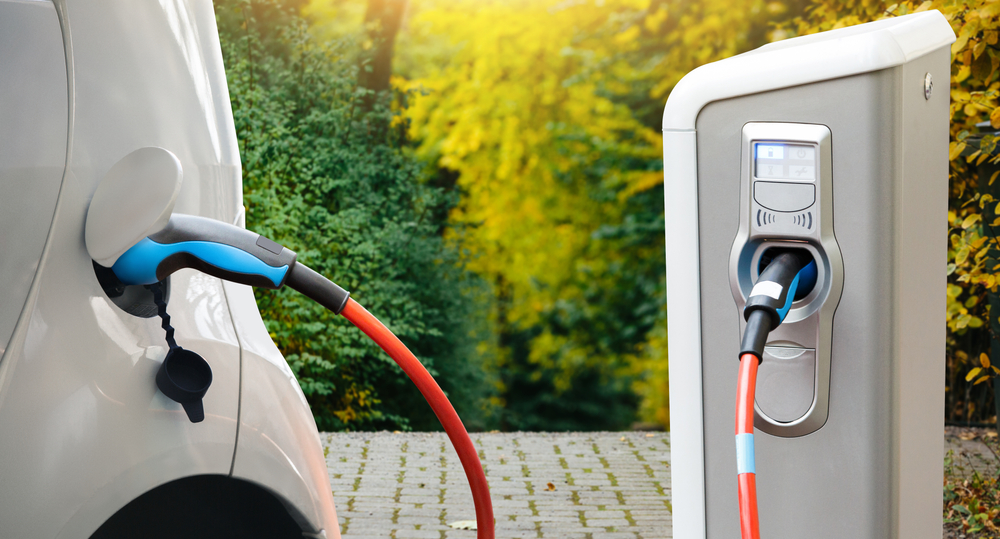
Electric vehicles (EVs) need to be charged. Therefore, creating an effective charging infrastructure is vital. It’s essential that the electric vehicle charging network is suitable for electric and hybrid vehicles and can cater for private vehicles and public transport alike, including zero emissions buses. 

EV charging infrastructure

An effective EV charging infrastructure may include an appropriate mix of charging options to offer a range of speeds including:

  • fast charging
  • rapid charging
  • ultra-rapid charging

Our frameworks have the products and services to suit every requirement.

Take a look at our agreement to find the full range of possibilities: 

Let us bring power to your procurement

To learn more about how we can help you reach net zero across your organisation, visit our carbon net zero page. If you have any questions, we are here to help – contact the team.

Energy for transport

Purchasing REGOs (Renewable Energy Guarantee of Origin) from our framework energy supplier to ensure that every unit of energy is traceable to a renewable energy asset. The Carbon Trust has to conduct a full audit of our electricity supplier’s administration

and management of their REGOs to ensure no greenwashing/double counting. Edf passed the audit in full.

Entering into a long-term Corporate Power Purchasing Agreement (CPPA). This allows you to purchase renewable energy from an asset over the grid, which then gets sleeved over to your energy supplier.  CPPA allows budget certainty for 15-25 years and allows additionality by contributing towards the build of new renewable energy assets such as Wind farms and Solar PV parks. You can join our green basket by leveraging on our aggregation volume and credit worthiness to obtain value for money in PPA contracts, or you can enter into a PPA yourself.

Our Heat Networks and Electricity Generation Assets (HELGA) agreement helps meet carbon net zero (CNZ) goals through consultancy for energy/carbon strategies, project design and feasibility of green and renewable energy projects – mainly focussing on solar power. Improvements

can be made to batteries, generators, heat pumps, combined heat and power, and heat networks to make them more energy efficient including lighting, building controls, fabric improvements etc.

Large scale energy efficiency retrofits are also available as well as Power Purchase Agreements for renewable energy and heat to make a significant step towards achieving CNZ.

Take a look at our carbon net zero in energy page to find out more:

Let us bring power to your procurement

To learn more about how we can help you reach net zero across your organisation, visit our Carbon net zero web page. If you have any questions, we are here to help – contact the team.

Logistics and Warehousing

However other factors also play a key role in achieving carbon net zero. 

These include reducing the number and total mileage of goods vehicles on the road through optimal route planning, mode shift such as road to rail and adopting innovative technologies in warehouse design to reduce carbon emissions.

Implementing centralised warehousing and making good use of urban consolidation centres also contribute to a reduction in carbon emissions.  

Managing demand by organising these operations more efficiently can help to drive transport emissions down further. 

Our Logistics and Warehousing agreements have products and services to suit every requirement – take a look to find the right solutions for you. 

Take a look at our agreement to find the full range of possibilities: 

Let us bring power to your procurement

To learn more about how we can help you reach net zero across your organisation, visit our Carbon net zero web page. If you have any questions, we are here to help – contact the team.

Courier and Specialist Movements

As cities across the UK are introducing low emission zones, courier suppliers are able to provide customers with the options to use alternative vehicles for their deliveries, reducing carbon emissions and removing surcharges for any deliveries into low or clean zone areas.

A number of supplier depots within UK cities already operate a fully electric delivery service,  which includes London, Bristol and Glasgow.

Suppliers are consolidating deliveries, looking at route planning to deliver efficiencies and maximising their networks, reducing their final mile emissions.

Our courier and specialist movements agreement can provide public sector customers with access to suppliers who have the ability to provide alternative vehicles for final mile deliveries.

Take a look at our agreement to find the full range of possibilities: 

Let us bring power to your procurement

To learn more about how we can help you reach net zero across your organisation, visit our Carbon net zero web page. If you have any questions, we are here to help – contact the team.

Postal Goods, Services and Solutions

This is done by removing traditional paper letters and communications and reducing the need for vehicles to transport them.

We also have new energy-efficient office equipment as well as remanufactured equipment options that will further enable you to minimise your environmental impacts.

Similar to courier and logistics, the postal market is transitioning to alternative and low carbon fuel vehicles for the collection and final mile delivery of post, further reducing emissions and increasing the options for delivery within clean air zones.

Take a look at our agreements to find the full range of possibilities: 

Let us bring power to your procurement

To learn more about how we can help you reach net zero across your organisation, visit our Carbon net zero web page. If you have any questions, we are here to help – contact the team.