G-Cloud 11 goes live with 4,200 suppliers

  • 4,200 suppliers named on new G-Cloud agreement
  • Over 90% of all suppliers are SMEs
  • £4.79bn spend through G-Cloud since 2012, £2.15bn directly with SMEs

G-Cloud 11 has now been awarded and will go live on the Government’s Digital Marketplace soon.

4,200 suppliers have been awarded places on the agreement with over 90% of them small and medium-sized enterprises (SME). More than 31,000 services will be available for customers to access, subject to a process of additional assurance.

Since 2012, more than £4.79bn of cloud and digital services have been procured by public bodies through G-Cloud, with almost 45% percent of that spend going directly to SMEs.

The agreement gives central government, local councils, NHS Trusts and other public sector bodies a way to purchase cloud-based services such as web hosting from a single, central website.

Niall Quinn, Director of Crown Commercial Service’s Technology Pillar, said:

‘G-Cloud continues to be a major success story for how we drive innovation in the public sector. G-Cloud is all about simplicity, making it as straightforward as possible for customers and suppliers to find each other.’

Triad, an SME based in Godalming, has been a G-Cloud supplier since 2013, originally winning a place on G-Cloud ii. 

Adrian Leer, Managing Director of Triad said:

‘Since winning a place on G-Cloud ii in 2013 we have been successful in winning a number of contracts for government. We have been involved in numerous large programmes of work across government and in January 2019 we were ranked 4th of the digital suppliers to government. To be ahead of some of the largest consultancies in the UK as an SME of 70 staff is incredible.’

G-Cloud is accessed through the Digital Marketplace, created in 2014 by Crown Commercial Service and Government Digital Service to make government procurement easier and more transparent.

To find out more about G-Cloud, visit the Digital Marketplace.

Accessibility is usability: Thinking about all your users

Imagine you need to find something on the internet. You do a quick Google search, find the result you want, click on it and have a look at the website, finding all the information you need. You might watch a video, or click through a series of questions to find the information you’re after.

Now imagine that you have one or more of the following:

Stick figures show how each of these disabilities might look in permanent, temporary and situational scenarios.

A diagram of permanent, temporary and situational disabilities for touch, see, hear and speak, from the Microsoft Design Toolkit.

  • a visual impairment
  • motor difficulties
  • cognitive impairment or learning disabilities
  • deafness or impaired hearing

Imagine that the site you need to use isn’t built so that you can easily access what you need. You can’t hear the video and there are no captions, the buttons are too small for you to easily click, the copy isn’t easy to understand because it uses words you’ve never seen before, or your screen reader can’t read all the text on the site because it’s an image.

This is the reality of at least 1 in 5 people in the UK, and many more who may have a temporary or even situational disability: it’s more common than you may realise.

In the UK there are:

  • 1.5 million people who have a learning disability
  • 7 million people who have dyslexia
  • 2 million people with a visual impairment

Naturally, these are all disabilities which would affect potential users of internet platforms, so we need to make sure that our services are easy for everyone to use, whatever their needs.

a comic book image of a man shovelling snow on the steps outside a school. Children are waiting to get into the building, including a child in a wheelchair. The man says he will clear the ramp of snow once he has finished clearing the stairs for the other children. The child using a wheelchair says that if he clears the ramp, all the children can get in

credit: Michael F Giangreco and Kevin Ruelle

It’s also true that accessible platforms, generally, are well-designed platforms. They’re clear, concise and easy to navigate, making life easier for everyone who needs or wants to use them – as this cartoon demonstrates.

What we’re doing to make the grade

On 23 September 2018 new regulations (the Public Sector Bodies (Websites and Mobile Applications) (No. 2) Accessibility Regulations 2018) were introduced to make sure that all public sector websites and apps are either built to accessibility standards or will be amended to meet them.

This means that every website and platform with a gov.uk web address needs to be easily accessed, easy to understand and easy to use by:

  • 23 September 2019 – New websites/platforms (built after September 2018)
  • 23 September 2020 – Old websites/platforms (built before September 2018)

To achieve these standards, Crown Commercial Service got help from a supplier of accessibility testing services, Olenick, who are helping us understand what we are doing well, what we need to do better, and how to improve our public-facing sites.

User testing: testing with disabilities

Along with all the technical testing, Olenick worked in partnership with Ulster University to arrange for our sites to be tested with two groups of disabled users, including people with visual impairments and learning difficulties.

The second round of testing worked with testers from NOW Group (a social enterprise in Belfast supporting people with barriers to employment and learning). Their service users include people with all levels of learning difficulty and learning disability, as well as those with autism and Autistic Spectrum Conditions, and they have developed the JAM card and app. The JAM card is designed to allow users to ask for ‘Just A Minute’ of extra patience – a discreet way of telling whoever they are communicating with that they need a little more time.

While of course all our testers were equally important to us, easily the most adorable was Morris

composite image of testers from Ulster University, including Morris the guide dog, a medium sized, golden furred dog.

Testers from Ulster University, with different disabilities on day one of testing, joined by Morris the Guide Dog

the guide dog. Morris was very patient throughout the testing, and even graciously decided to catch up on his sleep to let his companion complete the tests. As a result of Morris’s kind assistance, Olenick are now looking into sponsoring guide dog puppies – something our Newport office has been doing for a while.

Following on from the testing, CCS are hoping to work together with Olenick to set up more fund-raising for guide dogs, including a coffee morning – so it just goes to show, guaranteeing accessibility has more wide-reaching benefits than you might think.

New technology innovation marketplace ‘Spark’ opens

Spark: The Technology Innovation Marketplace has been designed to support cutting edge products and markets that aren’t catered for in traditional commercial agreements.

7 suppliers are already signed up to offer their goods and services, including innovative solutions in AI, the Internet of Things and wearable technology.

Spark will enable customers to use new but proven technologies which can drive public service innovation and cost-savings across the public sector. It is a dynamic purchasing system (DPS), enabling new suppliers to join and add new service offers at any point during the lifetime of the marketplace.

Niall Quinn, Technology Pillar Director at CCS, said: “Spark is the result of a wide-ranging review into how the public sector adopts new technologies. It has been developed to support SMEs through government buying power while stimulating growth in the UK technology sector.

“Because it is a DPS it will be continually open to new suppliers and will have functions built into the system that will help customers and suppliers to match capabilities to their needs.”

Spark was unveiled by the Minister for Implementation Oliver Dowden during the launch of the Government’s Technology Innovation Strategy, in a keynote speech at CogX, The Festival of AI and Emerging Technology, on Monday 10 June.

Find out more

Spark: The Technology Innovation Marketplace is now live for customers. For more information, visit the web page or get in touch with one of our technology experts quoting ‘Spark: The Technology Innovation Marketplace’ in the comments box.

New Logistics & Warehousing commercial agreement from CCS

The Crown Commercial Service (CCS) Document Management and Logistics (DML) Category Team, in association with YPO, are pleased to announce that after consideration of the customer demand we are looking to develop a Logistics & Warehousing commercial agreement.

This creative development will be the first-ever commercial agreement in this marketplace for public sector. We have issued a PIN notice to initiate interaction with the market to understand the offerings, advancements and future innovations and we are presently inviting our colleagues within the Central Government and the Wider Public Sector to offer us help to ensure we create and deliver solutions that meet both your present and future requirements.

Get involved in our engagement forum

We’re inviting you to unite with us directly from the earliest starting point of this procedure to help shape the design and scope of this understanding. Notwithstanding the scale or size of your storage and distribution needs, we would exceptionally value your contribution to:

  • The development of a fit for purpose, strong, commercially viable and exceedingly competitive agreement that is appropriate for all
  • Utilising the vast knowledge and experience of this market, and help us find out where we can gain from previous experiences
  • The advancement of commercial benefits that can be acknowledged through a robust specification of business needs

By tuning in to your needs and considering a highly effective mix of suppliers that drive competition, this agreement is intended to offer you great value for money while guaranteeing you have a completely EU compliant route to the market. With such a fantastic opportunity we welcome you to our initial engagement forums with the goal that we can together shape this one of a kind Logistics & Warehousing commercial agreement.

The first of the engagement forums will be hosted at Crown Commercial Service

8th Floor, The Capital, Old Hall Street, Liverpool, L3 9PP

Note down the dates for the forum:

  • Thursday 11th July

Other dates and venues will be released shortly.

Want to find out more?

Register for a place at one of the forums or ask us a question by filling in our online form quoting ‘engagement forums’

Find out more about this agreement

Call 0345 410 2222

Business Plan 2019/20 to 2020/21 published

Our focus last year was putting the customer at the heart of our business and this programme will continue into 2019/20 and 2020/21.

Our strategic objectives remain to: maximise commercial benefits; focus on the customer; and strengthen the UK economy through effective policy delivery. This Business Plan sets out how we intend to deliver our goals and ambitions and how we will measure and monitor progress.

Last year we saw £15.7bn of spend through our commercial agreements and we have an ambitious plan to increase this to £22.6bn over the next 2 years.

Underpinning this will be continued investment in our capability, ensuring fully engaged and motivated staff and driving our digitisation and transformation plans. In addition, our values will continue to underpin all we do. We will LISTEN, RESPECT, COLLABORATE and TRUST in order to DELIVER with CONFIDENCE.

Delivering against this plan will ensure we drive outstanding and continuously improving commercial benefits for the UK public sector, embedding real customer focus across the organisation and making CCS a great place to work.

Business Plan 2019/20 – 2020/21

The Art of Procurement – Read Simon Tse’s speech from Procurex National

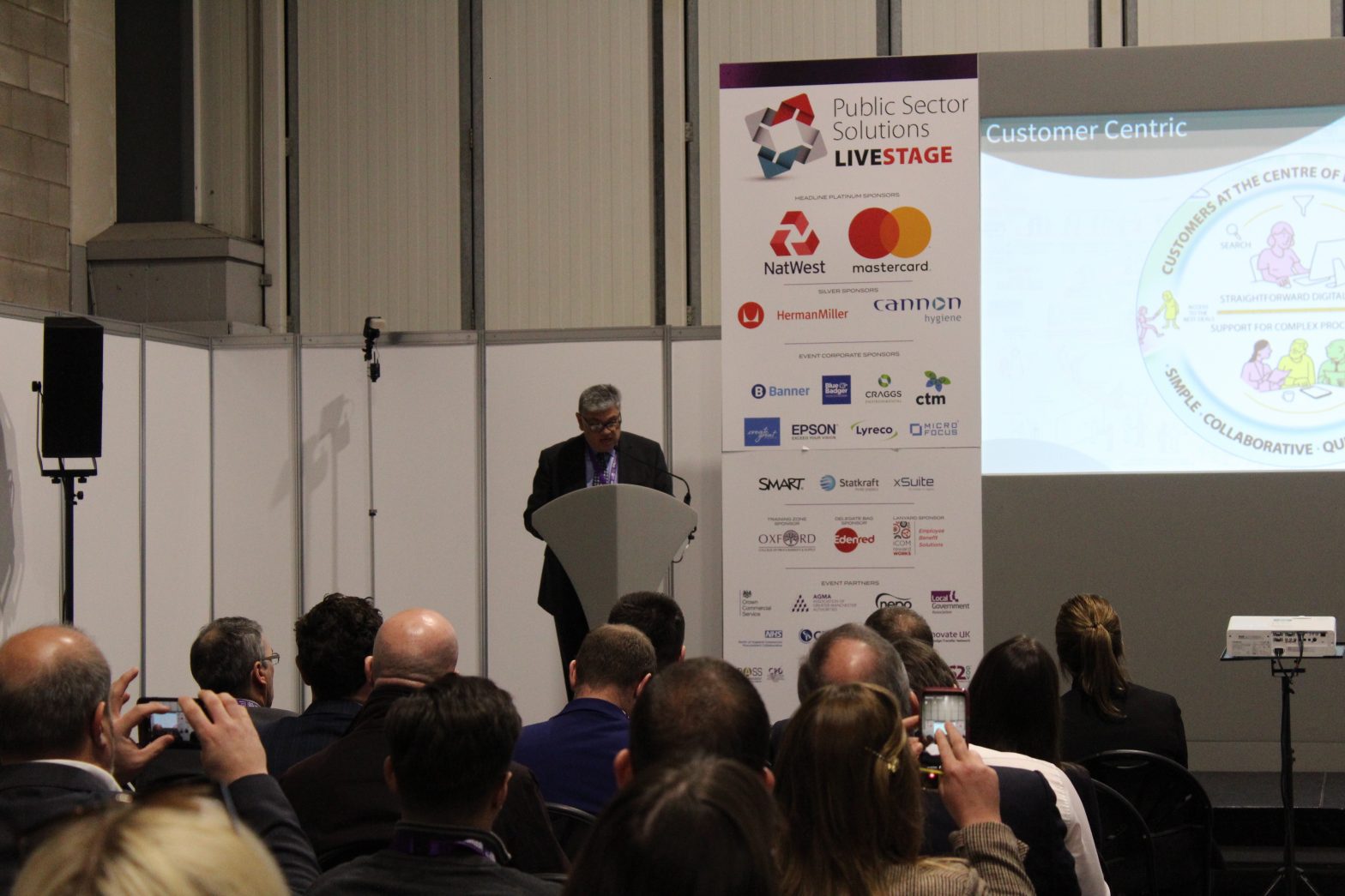
It’s a real pleasure and privilege to be here with you at Procurex. This event continues to be one of the great showcases for the innovations now driving the transformation of our public services. But it is also a wonderful opportunity for discovery – a chance for those who buy and supply for the public sector to share their knowledge and experience.

Simon Tse delivers his keynote speech

Procurex consistently provides tremendous networking and collaboration opportunities for all of us as we work to support the positive transformation of fellow citizens’ lives. I really do hope this event and the people you meet here help energise you in your work.

At CCS, we help over 17,000 customers to buy the goods and services they need to deliver front line services for citizens, and the range of that work is vast; from laptops to locum doctors, research services to laundry.

We have three goals at CCS.

The first is to maximise commercial benefits – our customers need to know they are getting the best value possible from assured suppliers, both large and small, wherever they operate. 

Secondly, we strive to focus on the customer. The relationships our people build dictate everything else we do and the ways in which we do it. We are working to earn and build trust with all of our customers whether they are in central government or the wider public sector. We are working, through our knowledge, experience and understanding, to make CCS easier to work with.

Lastly, all of this effort should strengthen the UK economy through the delivery of policy. For example, the government has challenged the public sector to drive one third of its procurement spend into small businesses by 2022. So we’re ensuring, through innovative lotting structures, that SMEs are not disadvantaged on our agreements.

If we achieve those goals we will significantly increase spend through our commercial agreements. 

CCS used the event to unveil our experiential exhibition ‘The Art of Procurement’

We will do this through a team of experienced and talented individuals committed to giving customers the help they need. We’ll make procurement simple, whilst getting the best deal on quality and price for the UK tax payer.

But aligned to that, our customers have told us that pace, consistency, ease of use and engagement are what they need to see from us. They know we can deliver the compliance and the savings – but they also need reliability, simplicity and an understanding of where they require something more. And so we have started a transformation journey to ensure we live up to these expectations and create an added value for customers – a value that is not necessarily measured in pounds and pence.

The financial savings are important. They always will be. But the real value in what we do is freeing up scarce resources so there can be a positive impact elsewhere in the system.

What do I mean by that? Well, let me give you an example: it’s important to me that Crown Commercial Service saved £1,200 on electronic tablets for a customer, but it means so much more when I know the customer was a primary school able to reinvest that saving in its pupils’ education.

This Andy Warhol-style piece is entitled ‘Buying Power (Fleet)’. The card next to it explains that the picture is intended to demonstrate the benefits of aggregation for different public bodies with similar needs

And we can scale that up: three NHS trusts made £9 million a year savings on their locum doctor bill through one of our agreements. It’s extremely powerful to imagine how resource redistribution on that scale might positively change patients’ lives.

What we’re doing every single day is operating beyond price. We’re looking again at how we operate and what makes us distinct from other providers.

CCS hasn’t always got this right. Perhaps in the past we’ve relied on our scale and gold standard compliance to do the heavy lifting for us. Maybe we’ve also been a little arrogant. I’ll leave that for others to judge. But I will tell you that we can’t operate like that any more and we won’t do so.

These ‘anaglyphs’ show different messages for buyers and suppliers, depending on which coloured glasses you look through

Our customers value relationships built on great service, transparency, pace of delivery and above all honesty. So we’re changing the way we do procurement and, perhaps, the way others view procurement.

On the face of it, this business is about saving money. Pure and simple.

But it’s not that simple is it? We’re really so much more than that. We must be very clear about what it is that we are encouraging – this is not a race to the bottom where the lowest bid wins out. It is our role to facilitate the raising of standards across the public sector through efficiency and innovation. That’s what CCS should be doing. That’s where CCS should be leading.

We are doing so. From September, we will implement a policy requiring larger suppliers to answer questions about their supply chain management, tracking systems and payment practices – including the percentage of invoices paid within 60 days. Those unable to demonstrate a fair and responsible approach may be excluded from bidding. 

When we engage with the markets we operate in, we should shape them with those principles in mind. We should encourage our customers to accept challenge about the way they currently do business – that’s how innovation happens, that’s how citizens experience improvements in their services.

Customers could speak to our procurement experts about the latest CCS commercial agreements

Similarly, suppliers working with central government and the wider public sector should be encouraged to balance risk with reward – they should know that our customers are looking to them to provide solutions that deliver value for money but within the context of a forward leaning environment. They also need to understand that we place great value on social issues too, such as the living wage, as well as the bottom line.

So, practically speaking, where do we add value? Well, one way we’re evolving our role is through social value. We’re ensuring our customers can use our agreements to deliver the benefits they are looking for – from creating more apprenticeships for young people to reducing carbon emissions, from promoting equality and diversity to assuring supply chains are free from the tragedy of modern slavery.

Our agreements are now designed to give customers the flexibility they need to decide their own, specific social value benefits, in keeping with their own social value objectives.

These artworks change depending on your point of view – much like any procurement

The most popular 20 frameworks that CCS offers to its customers have already been assessed and are ready to help customers secure social benefits now. This includes Energy Performance Contracting and Technology Products 2. We’re even providing tools and guidance to help build social value into procurements and measure the social value element of bids received.

But we know that we still have improvements we can make and that we can only provide what our customers really need if we listen to them more closely. So we’re investing time and resources in our customer relationships to better understand clients’ needs.

Our new Customer Experience Directorate is supporting this. This team is focused on listening to customers, understanding their needs and helping them to get the best possible value for the public purse.

That doesn’t mean we can’t challenge them though – and we do. If a customer is too prescriptive to a supplier, we risk limiting innovation and ending up with a less satisfactory solution than might otherwise have developed. So we will continue to encourage engagement between customers and suppliers in the early stages of procurement in order to increase the chances of valuable leaps forward which make government smarter as well as increasing value for the taxpayer.

The changes we’re making at CCS mean we’re also looking afresh at our suppliers too – at how we work with them, at how we can better leverage the private sector’s ability to innovate for the benefit of the public sector.

Francesca Livesey from our Policy team spoke on the latest Government efforts to tackle modern slavery in supply chains

By introducing new but proven technology sooner than has previously been possible, citizens will see improvements across the services they experience. We are confident we can bring these technologies through faster than ever because of the relationships we are building with the tech industry and the purchasing platforms we are creating for our customers. Technology is obviously an SME-heavy sector, so we will see a significant amount of spend going through smaller innovators. But they will only be attracted by simpler procurement processes – we’re working hard to ensure that will be the case, and we’re really excited about this aspect of our work.

We have also invested in our people, and continue to ensure our processes are easier to use for both customers and suppliers.

We’re not there yet. CCS is on a transformation journey but we have put our digital agenda at the fore of the organisation.

…while Emilia Cedeno introduced a packed auditorium to our digital agreements

For example, the CCS Fleet Portal is a live, competitive quoting tool for standard build cars and light commercial vehicles. With it, customers can direct award to suppliers on the CCS Vehicle Purchase and Vehicle Lease frameworks.   

The on-line selector allows customers to identify the vehicles that best meet their needs and, since its relaunch in January, 882 users across 560 organisations have registered. An average of 11,500 lease quotes are being generated each month delivering market comparator savings of 11.3% to our customers.

This is just one example of how we are using digital solutions to make our processes more intuitive and attractive to use.

Our Research Marketplace is used to inform government policies and ensure services are built on robust evidence, but it is accessed via a dynamic purchasing system. This not only allows for unlimited suppliers, but puts the customer in control; allowing them to select the areas of work that they want to commission and enabling as broad or as specific range of suppliers as they need.

Of course, self-serve won’t suit every agreement. Some customers in certain markets will require more support and we can offer this too. As I set out earlier, our approach is to listen to our customers and find out which route to market suits them best so that our agreements are appropriate and effective.

We’re even listening to our competitors because we recognise there is expertise elsewhere outside CCS. In fact, we’re working collaboratively with like-minded organisations because we believe we all have a role to play.

It’s our view that together we can raise standards, innovate and make savings across the public sector for the benefit of all. 

It seems to me that innovation, both in the products and services our suppliers can offer our customers, and in the way CCS itself thinks and works, is how we will drive the transformation of our public services. After all, that’s what we’re here for.

Find out more about our commercial agreements

 

Use behavioural insights to help you improve your services

It can help you formulate and deliver your desired outcome by helping you understand how citizens make choices, so that you can tailor your services to meet their needs.

The 4 basic principles of behavioural insights are:

  1. Make it easy
  2. Make it attractive
  3. Make it social
  4. Make it timely

Sounds simple, but as we all know that is not often the case!

So if your organisation is looking for innovative ways to improve policy and service design and delivery, or implement organisational reform, then our new Behavioural Insights framework is ideal for you. It will help you to tap into the very best expertise from a wide range of suppliers, including SMEs.

The services available for you to choose from include:

  • Policy analysis, development and advice
  • Service insight, service design, service delivery and organisational reform
  • Design and implementation of trials
  • Evaluation and reporting of trials
  • Capability building, including the design and delivery of learning activities
  • Thought leadership, including strategic work to review and identify untapped opportunities to apply behavioural insights

To find out more visit the framework web page or get in touch and mention ‘behavioural insights’ in the comments box, along with any questions you have, and we’ll get back to you.

South West NHS Energy Group’s price benchmarking report

The public sector energy challenge

NHS trusts are regularly approached by a range of public and private sector providers looking to get them to switch their energy deals. These providers, known as Third Party Intermediaries (TPIs) will typically claim to be able to outperform the Crown Commercial Service (CCS) on the energy markets and deliver greater savings.

Assessing these claims and understanding if switching is the right thing to do can involve trusts investing significant time, effort and resource. To help address this the Associate Director of Estates for Poole Hospital NHS Foundation Trust – George Atkinson, recently undertook a benchmarking project on behalf of the South West HEFMA Energy Group. This set out to provide an independent review of CCS trading performance against 1 of the largest TPI’s.

The solution

With a longstanding background and understanding of utilities and the energy markets, George was able to run a comparison of the different trading strategies on offer in order to determine potential areas of savings for the trusts. Whilst looking back over a number of years, the focus was given to the 15/16 year out turns.

The results

It was clear from the findings that for both gas and electricity, the best performing trade baskets during 15/16 were the CCS short term variable options (known as V6 baskets). Whilst the V6 baskets do expose customers to more volatile month on month price changes, they allowed customers’ pricing to reflect movements in the market on a real time basis. When comparing the 15/16 CCS V6 baskets against one of the largest TPI’s in the market, the CCS V6 basket provided greater trade savings than all alternative managed traded baskets on offer.

The findings from the South West group were also verified by an NHS trust in the Midlands region. The results were the same – CCS clearly provided greater savings for the trusts.

The graphs below show the output of the benchmarking project on a month by month basis with the results covering a full year’s consumption/cost comparison:

It was recognised that looking only at a single year held limitations. Longer term trade performance research over periods greater than 3 years has been conducted by independent bodies such as the London Energy Project (LEP). LEP reports are available to member organisations at www.londoncouncils.gov.uk.

Whilst CCS is a not for profit organisation it does charge a commission for its services. This commission rate is clear and transparent for all customers and is based on a single charge per meter (not on a pence per kilowatt hour rate). Evidence provided from trusts who have moved back to CCS or those that have been approached by alternative providers (whether from the private or public sector) has revealed that the CCS rates are substantially lower than those of other providers. The sales approach used by other providers appears to be to bundle a range of services in order to justify the increased costs. However, on closer inspection, a large number of these are provided free of charge as part of the CCS frameworks with the suppliers and are fully covered as part of the standard CCS commission rates.

In summary

Getting the best possible deal on energy costs is a key priority for all public and third sector organisations and allows them to focus more of their resources on delivering against their key priorities. Our trading performance is subject to regular independent reviews such as the study described here undertaken within the NHS. These consistently show CCS to provide best value.

Get involved

Before considering any change to your energy provider why not come and talk to us or your existing CCS supplier? Together we can help you to manage your portfolio set up and reduce your overall energy demand to make real savings without the risk of switching providers.

Got a question or want to find out more? Complete our online form and mention either gas, electricity or both in the comments box depending on your requirements.

Get involved with the conversation on Twitter #PoweringThePublicSector

Management Consultancy Framework Two is now live

Business, procurement, supply chain and commercial, complex and transformation and strategic consultancy options are all now available following the launch of the Management Consultancy Framework Two on 4 September.

Webinars

Starting on 16 October, we will be hosting regular webinars to support public sector customers interested in using the frameworks. If you would like to join us to find out more please check out all the available dates and book your place.

To ensure you get the most from each webinar places are limited to 10 per session. Make sure you don’t miss out – reserve your space now.

If you have a particular requirement or topic you would like us to cover please let us know – we may be able to run a webinar specifically for your organisation.

Benefits

Our management consultancy frameworks offer you the benefits of:

Assurance

  • all our suppliers are Cyber Essentials accredited
  • standard terms and conditions
  • financial monitoring of suppliers

Value for money

  • maximum rates are capped for the life of the framework
  • further competition is the recommended way to ensure best value
  • choice of pricing models including fixed, risk and reward or time and materials

Easy access

a selection tool to help you quickly shortlist suitable suppliers
comprehensive guidance and templates to make getting started as straightforward as possible

Expertise

  • all suppliers will share their knowledge with you as part of their contract, meaning you can build your organisation’s future capability
  • all suppliers can help you put their advice into practice, if required
  • procurement support from a dedicated and knowledgeable team at CCS

Choice

  • a wide range of suppliers from SMEs to large multinationals
  • sector based lots give you access to a broad range of industry experts
  • Download a brochure for further details of the scope of services available.

We’re here to help

For more information on how we can help you optimise your consultancy requirements, achieve efficiencies and make savings please get in touch.

You can also visit the web page or call us on 0345 410 2222.

Transform your space with Fit Out

The latest Fit Out agreement (RM6073) is now available providing services for design, renovation and refurbishment of new and existing buildings. Its purpose is to support the modernisation and rationalisation of the Government Estate.

What is Fit Out?

Fit out and refurbishment is the process of developing new interior spaces or existing spaces to support new and more efficient ways of working. The wider public sector have the ability to create agile or activity based working following a construction phase, acquisition of a new property or review of existing property.

There are many benefits of how an office fit out affects work performance such as increased productivity, wellbeing and employee satisfaction. In addition, workplace design plays a pivotal role in demonstrating a business’s values.

Fit-outs can take a number of different forms such as Shell & Core, CAT A or CAT B, depending on the level of interior specification requirements.

  • Shell & Core

This is the first stage of a buildings’ fit out which is provided by the developer and generally comprises of the basic structure of the building. This often includes key communal areas such as reception, lifts, stairwells, toilets and meeting rooms. Once completed, this space will simply be an empty “shell” on the inside.

CCS Fit Out

  • CAT A

A CAT A space primarily provided by a developer or landlord could be habitable, but is typically an open plan finish which is treated as a blank canvas. Typically a CAT A fit out will include: raised floors, suspended ceilings, basic electrical services, smoke alarms and finishes to internal walls.

  • CAT B

This follows on from a CAT A fit out and is the completion part; allowing you to transform the blank canvas into a functioning space. This is usually tailored to the individual requirements of the business, delivering custom design elements which reflect your brand and work ethos. This could include anything from furniture, break out spaces, meeting rooms and office amenities.

CCS Fit Out Agreement

Get Involved

With both UK and regional coverage, the fit out agreement provides either a traditional or design-and-build approach to your project and suppliers can advise on the best solutions to meet your requirements.

To find out more or if you have a specific question, please complete our form quoting RM6073 and one of our building experts will be in touch.