CCS delivers value to the NHS for Vehicle Purchase and Vehicle Telematics

The requirement

NHS Trusts are tasked with delivering critical medical services and require vehicles that are fit for purpose in meeting their operational requirements.

The solution

In order to meet its operational fleet requirements, the Welsh Ambulance Services NHS Trust ordered 51 RAV4 fully converted and fitted with Telematics to replace its diesel fleet with vehicles that are more environmentally efficient, yet equally capable of carrying crews and equipment. The Toyota RAV4 Hybrid was selected for its qualities to serve as a new rapid response vehicle for NHS paramedic teams. The Trust chose to use Crown Commercial Service to source the vehicles using the vehicle purchase framework agreement (RM6060) as well as the vehicle telematics solutions that they required.

The vehicle purchase framework agreement provides access to a full range of motor vehicles including vehicles that are both currently available and those that will be developed and brought to market during the term of the framework. These include cars, light commercial vehicles, motorbikes, heavy goods vehicles (HGVs), buses and coaches. Customers can also obtain bespoke conversions which manufacturers are able to provide as part of a turnkey solution.

The results

The new SUVs are being supplied by Toyota and will be covering up to 40,000 miles a year, working the length and breadth of Wales. Toyota is also providing additional support, organising training for NHS vehicle technicians so they can service and maintain the vehicles to manufacturer’s standards, minimising the time they have to be off the road.

Following a comprehensive technical evaluation and a detailed procurement process via CCS, Ortus Telematics were selected to provide its Datapoint product to be installed into the vehicles. The Trust were seeking to implement a vehicle telematics solution to enable the them to adopt a more proactive approach towards driver training and also provide data relating to driver identification and assist with more effective and efficient utilisation of vehicles:

The Trust is taking delivery of RAV4 Hybrid Design models, equipped with Toyota’s AWD-i intelligent all-wheel drive so they are better equipped to access remote locations and deal with hazardous driving conditions such as ice and snow. The standard provision of Toyota Safety Sense active safety and driver assistance systems ensures the crews have the best possible protection while on the road.

The Trust’s fleet manager David Holmes, said: “Our vehicles have to meet strict reliability and carrying capacity criteria as they perform a vital function helping the people of Wales. Not only does the RAV4 Hybrid meet our requirements, it is also helping us reduce the environmental impact of our fleet.”

Toyota are appointed to Lots 1 and 2 of the RM6060 Vehicle Purchase framework agreement to provide cars and light commercial vehicles. Ortus are a supplier on Lot 1 of the new RM6143 Vehicle Telematics framework supplying vehicle telematics hardware, software and associated products.

Get involved

Visit our website to find further information on the Crown Commercial Service fleet framework agreements. If you would like to find out how you could benefit from using these agreements, please contact us at info@crowncommercial.gov.uk.

14 NHS trusts save £4 million on mobile voice and data services

The requirement

Purchasing mobile voice and data services is often a routine purchase for many NHS trusts, regularly resulting in varied contract end dates. This can create a barrier to switching suppliers to gain better value, as potential savings may be reduced or lost due to early termination charges. 

At CCS, through our regular bulk buying opportunities, our aggregation team helps health customers by combining their mobile voice and data requirements with other organisations. This collective buying power helps CCS achieve competitive pricing and favourable terms from suppliers, which increases savings for our customers.

The contracts were delivered through further competitions run via Lot 6 of our Network Services 2 framework.

The solution

In the last 12 months, 14 NHS customers have taken part in our mobile voice and data aggregations, which are run 3 to 4 times per year. 

Before each aggregation, we engage with the public sector to gauge interest in upcoming opportunities. Based upon approximate volumes, we identify minimum indicative savings and ceiling prices. These are guaranteed minimum savings that customers can expect to receive.

Customers can then confirm their volume commitment, tariff requirements, any other customer-specific requirements by signing a Call-Off Order Form and Letter of Intent. This confirms the customers’ commitment to buy. 

From this point, CCS runs the aggregation, identifies the supplier who can offer the best quality and price for the requirements, and presents each customer with a standalone contract. The process from the customer confirming their requirements to award takes around 6 weeks.

The results

Through the last 4 mobile voice and data aggregations, 14 NHS customers saved £3.9 million – an average saving of 70%. 

By bringing together health customers with similar needs, our aggregations mean organisations can harness bulk buying power to unlock greater savings. Customer requirements ranged from 14 to 7,000 connections, and the savings delivered were 23% above the benchmarked rate.

Of these customers, 2 had joined a previous aggregation, and despite the large savings achieved through their initial aggregation, were still able to save another 68%. 

Add power to your procurement with CSS

Taking part in an aggregation means many of the usual further competition procurement steps are handled by CCS, saving you precious time and resources. We will draft all documentation, build the specification and run the procurement. 

This is a fully managed service, provided and funded by CCS, and is a tried and tested approach that has delivered significant savings to the public sector. 

Our next Mobile Voice and Data Services aggregation (NFC142) is now open for expressions of interest from customers. You have until mid-January 2022 to submit your requirements, with a formal contract award set to take place in March 2022. 

  • If you would like to take part, please complete our online form quoting ‘NFC142 mobile voice and data aggregation’ in the comment box and a member of our team will be in touch. 
  • Learn more about Network Services 2 via the webpage.
  • To find out more about aggregation, visit our website or watch our webinar

Customer newsletters for September

Welcome to our CCS customer newsletters for September. You can read the latest news most relevant to the sector you work in by selecting the appropriate link below:

If you don’t currently receive one of our CCS customer newsletters, you can sign up by completing this short form. Each month, we’ll send you the newsletter most relevant to you, based on your organisation. 

You will also find a full list of all the commercial agreements we offer, alongside details of how we can help you build policy considerations into your procurement, in our interactive digital brochure.

Crown Commercial Service and UKCloud launch new MoU for multi-cloud services

The new MoU will enable the delivery of flexible and secure multi-cloud services, underpinned by preferential commercial terms to ensure public sector organisations achieve maximum value for money. 

This MoU ensures that you continue to have the benefit of choice and options of multi-cloud alongside the more proprietary options available from the cloud providers. Multi-cloud extends the typical sole focus of newly developed cloud-native applications to also support the modernisation of existing and legacy IT. This represents a significant opportunity for organisations to save cost, increase resilience and become more agile while transforming essential services for UK citizens.

UKCloud offers additional benefits that align with the One Government Cloud Strategy, including social value and a commitment to carbon negativity.  

Establishing new routes to market and supporting the digital ambitions of organisations across the entire public sector has been a strategic deliverable for CCS and this MoU marks a great milestone in delivering value and operational choice.

For further information please contact Andy Bright from UKCloud at abright@ukcloud.com. To speak to a member of our team, please complete this form.

Modular Building Solutions framework supports rapid roll-out of COVID testing sites

The requirement

As a result of the COVID-19 pandemic, the demand for testing sites began to rapidly increase. In an effort to protect and safeguard public health, the Department of Health and Social Care (DHSC) was tasked with the job of facilitating a roll-out of testing sites across the UK.

The solution

Modular buildings provided the ideal solution for DHSC as they are significantly quicker to build and offer improved safety, reduced risk, and greater certainty of completion on time and budget

DHSC used our Modular Building Solutions framework to source suitable suppliers who could meet their requirements. This framework has been designed to help the entire public sector with their permanent or temporary modular and portable buildings, which can be purchased or hired, and designed and fabricated to the customer’s exact specification.

Premier Modular, one of our modular building and offsite construction specialists, secured one of the contracts with DHSC. Their initial contract required 25 testing sites across the UK and was soon extended to up to 50 sites nationwide – from Portsmouth right the way up to Inverness. 

Each standalone testing site had a 110sqm purpose-designed testing building pre-fitted with eight patient cubicles, hygienic walls, separate staff entrance and exit, test collection, and drop off zones and a family testing room. Premier was also contracted to supply a number of other facilities for the testing sites, including a PPE room, stores, test preparation, staff rest room, kitchenette and toilets. They also provided essential services such as a water supply, alarm systems and electricity generators, reducing procurement time for DHSC.

As modular buildings are constructed off-site, Premier was able to continue operating safely and at capacity from the very start of the pandemic in March 2020. They maintained social distancing measures in a controlled factory environment, which helped to reduce the number of subcontractors operating on construction sites during the pandemic. They were also able to recruit around 100 new workers during the pandemic because of the increase in demand for temporary modular buildings. 

The geographical spread of testing sites required strong logistics and detailed project management from Premier. Their team reduced site installation to as little as 3 days, including testing, commissioning, service connections, handover, and inductions.

Our construction category team supported the client  with specialists in  offsite solutions, supporting strategic and operational decision making to ensure clarity of specification was brought to an evolving requirement. As the speed of demand out-stripped the immediate availability , our construction team used the Alliance Contract to enable full collaboration between multiple suppliers, working openly to resolve problems and ensuring all suppliers were working towards the clients common goal. 

The results

Due to the success of the project, Premier’s project team received a highly commended award in the ‘Best COVID-19 Project Team Award’ category, announced at the Building Better Healthcare Awards in London in November 2021.

Paul Jones, Category Lead, Crown Commercial Service said:

I was completely overwhelmed and proud of the response and collaboration between suppliers and all the hard working teams shown in the response to the covid test sites. The engagement and support given to the client to turn a difficult requirement into a fast and slick deployment really showed the benefits of dealing directly with the building manufacturers. The team work shown during this project has made the Alliance strong and we are seeing that positivity in the procurements we are doing currently.

Ian Astley, Regional Director, Premier Modular said: 

Working with CCS on the COVID-19 testing site schemes was a really positive experience, despite the extremely short lead times for each project and the wide geographical spread of the sites. The criteria for the submissions were clearly defined and the scope very well presented. The DHSC and CCS were, as always, a pleasure to work with throughout and we look forward to collaborating on future modular building projects.

Let us bring power to your procurement

Our Modular Building Solutions framework offers the public sector an alternative to traditionally built accommodation.

To find out how we can help future proof your estate, your way:

*Image courtesy of Premier Modular

The Crown Prosecution Service improve their user experience with our Technology Services 2 framework

The requirement

The Crown Prosecution Service (CPS) works from 14 key regional sites with links to courts and police forces across the UK. 

They required a service desk provider who could manage all of their service user contacts, critical operational services integration and management (SIAM). 

They also required the supplier to receive, triage and manage calls to resolution, along with reviewing the incidents raised and suggesting continuous improvements to the services provided across all the CPS ICT suppliers. 

Despite the fact that they operate across a multi-supplier environment, the CPS wanted to ensure that their user experience was seamless, and that users had access to the help and support they required. 

The solution 

The CPS used our Technology Services 2 framework to find a supplier who could meet their requirements.      

CGI’s 5-star certified service desk was successful in securing the contract.

It acted as the single point of contact for users to obtain assistance and support for all ICT services within the CPS multi-supplier environment. They were able to provide CPS with the following solutions:

  • service desk: the 24 hour a day service provided a single point of contact for users seeking assistance relating to any ICT services. It is responsible for logging tickets from multiple channels including phone calls, email, WebChat and the self-service user portal, as well as managing incidents through to resolution by co-ordinating with other suppliers operating in the CPS’s multi-supplier model.
  • IT service management (ITSM): services to configure, manage and maintain the ITSM. This includes incident management, problem management, service level/priority management, request fulfilment management, service asset and configuration management, knowledge management and service level and MI reporting.
  • managing the multi-supplier operational environment: operational service management and monitoring across all services relating to the ICT environment, the CPS and other suppliers. This includes managing major incidents to resolution, managing cross-supplier problem management process and maintaining the master configuration management database (CMDB).  
  • supplier provided services: delivery of services such as customer satisfaction, IT service continuity management, knowledge management and service, security and issue escalation to support CGI’s own service desk provision.  
  • continuous service improvement: consistently develop to improve the overall service to CPS users. Improvements implemented to date include ticket trending to identify user-training needs, development of ServiceNow dashboards for use by all CPS suppliers and enhancements to major incident reporting.  

The results 

The CGI 5-star certified service desk, which is located in the UK, now manages in excess of 13,000 contacts per month for CPS and has helped deliver the following results:

  • a responsive approach during COVID-19 to facilitate rapid changes in processes and working practices to enable CPS to adapt to evolving business challenges 
  • reduced call waiting times achieved through accurate demand forecasting and workforce availability planning from analysis of call patterns and trends
  • reduced timescales for reporting and recommendations on cost reduction
  • a better user experience through the availability of multiple contact channels, including a user portal with knowledge and self-help articles
  • operational integration to provide CPS users with a seamless service across its multi-supplier environment.

Fiona James, Deputy Director of Digital, Digital Technology Service at CPS said:

CGI continues to demonstrate its commitment to CPS, its users and multiple suppliers by working collaboratively, managing change to minimise the impacts, as well as proactive management of incidents and requests. 

Let us add power to your procurement

Our Technology Services 2 framework has now been replaced by Technology Services 3, which includes new features including reduced timescales, pre-defined terms and conditions and over 250 suppliers, of which 64% are SMEs. 

To find out more about our Technology Services 3 framework, register for our complimentary customer webinars on 15 September at 10am and 21 September at 2pm

Modern slavery: read Crown Commercial Service’s modern slavery statement

Crown Commercial Service has published its first annual modern slavery statement – setting out the positive steps the UK’s largest public procurement organisation has taken to identify, prevent and mitigate the risks of modern slavery in its own operations and supply chains.

The statement covers 5 key reporting areas including CCS’s approach to risk management, policy implementation and training. The statement also provides details of CCS’s longer-term commitments to tackling modern slavery and preventing other labour abuses from occurring in its supply chains.

It covers the period 1 April 2020 to 31 March 2021, and is available now through the Home Office’s Modern Slavery Statement Registry.

Simon Tse, CEO of Crown Commercial Service said:

We are committed to doing everything in our power to reassure the general public and our customers that public spending on goods and services is not funding modern slavery and human rights abuses.

Managing modern slavery risk effectively is a huge challenge that will require vigilance, as we seek to build back fairer.

The statement explains where CCS judges the risk of modern slavery to be highest, and actions taken to manage that risk. It also sets out our future goals and plans to tackle modern slavery in our supply chains.

Developing a consistent approach to modern slavery

CCS has been playing an active role in developing the Government’s strategy and policies to tackle modern slavery in government supply chains since 2016. 

The organisation jointly developed these policies with the Home Office and Cabinet Office, in consultation with the cross-government Modern Slavery and Procurement Implementation Group.

CCS is also taking steps to ensure that suppliers who fall in scope of Section 54 of the Modern Slavery Act and have an annual turnover of at least £36 million, are publishing an annually updated modern slavery statement on their website, through our contract compliance and supplier management processes.

In the past year, the organisation has worked alongside researchers from the University of Liverpool, looking at the impact of Covid-19 on modern slavery risk management.

Find out more

To find out more about how you can help to stamp out modern slavery in supply chains, visit the Responsible Buying Decisions pages.

Employee reward and recognition: the benefits of going digital

With a question mark hanging over traditional in person festive celebrations, end of year reward or gift has come into sharper focus.

The benefits of digital reward schemes

Under challenging circumstances employees have continued to deliver public services, many while adjusting to more permanent hybrid working arrangements.

For a number of years now, digital reward and recognition has been developing into the new standard, offering simplicity, speed, and choice. They can also enable a more engaging and personalised experience. And, particularly when employees are unlikely to be in a central location to distribute gifts, reward schemes that are easy to deliver digitally are proving to be the most beneficial.

The impact of reward on employees

When reward schemes are done well, the impact can be high – 61% of staff say receiving end-of-year recognition makes them feel appreciated.

The reward doesn’t have to be expensive. For staff, it really is the thought that counts. Research consistently shows that employees are happy with rewards worth between £21-£50. Often, a cash reward won’t cut it. What really matters is that you provide an engaging way to say thank you. For example, 70% of employees say they’d like to choose their own reward by receiving vouchers or gift cards. More than half (58%) say they’d like to receive something other than cash at year end. (Statistics taken from 2015 and 2017 Edenred Christmas Reward Research.)

Find out more

A digital reward and recognition scheme is available through our Employee Benefits framework. Plus, the single supplier on the framework, Edenred, has produced a guide on how to reward employees this year end and plan a long term recognition strategy for a hybrid world.

You can find a full list of all the commercial agreements we offer, alongside details of how we can help you build policy considerations into your procurement, in our interactive digital brochure.

Keeping critical information safe with a new network infrastructure for Walsall Healthcare NHS Trust

Walsall Healthcare NHS Trust employs 5,500 staff who deliver vital healthcare services to inpatients and outpatients at the local general hospital, alongside community services for the 250,000 strong local population.

To securely manage and store vital information about patients, treatments and equipment, and keep that critical information safe, they needed a stable and reliable network solution to replace their ageing data centre. 

The requirement

The existing data centre for the Trust was located at their main hospital and was coming to the end of its usable life. As servers age, their reliability and performance decrease, while their ability to support new applications declines.

With a traditional data centre infrastructure, such as the one used by the Trust, there are separate silos to manage for compute, storage and virtualisation, making the network run too slowly. As a result, the Trust was not able to implement new technology as there was no guarantee it would run effectively on its old servers. 

In addition, the Trust’s backup solution was not up to the job of supporting its business requirements and, without adequate backup, they risked not complying with data management regulations.

Scoping out a new solution required forward planning. The production and hardware platforms would have to support the Trust’s business needs, as well as being able to handle future demand over the next 5 years. 

The entire platform, including the primary and secondary site, network, backup software and hardware would need to be procured for a fixed budget.

The solution 

Through our Technology Products and Associated Services framework, the Trust carried out a further competition to decide on their chosen provider, with Insight emerging as the successful supplier. 

As part of an initial review, the supplier carried out a technical workshop with the Trust to determine the most effective solution for the network infrastructure. This led to Insight suggesting that the Trust’s ageing traditional 3-tier infrastructure be replaced with an enterprise cloud environment.

The new infrastructure consisted of the Nutanix hyperconverged VMware vSphere solution that would run the Trust’s business workload. This new solution is much less complex than the previous infrastructure because it integrates the server, storage, virtualisation and networking. And, to address the Trust’s need to manage future demand, the Nutanix enterprise cloud platform provides the ability to run any application at any scale.

To protect the Trust’s data, Insight recommended Veeam Backup and Replication, which is designed for virtual environments. The software enables users to back up, restore and replicate functionality on virtual machines. The Trust can run full or incremental backups and receive automated verification once the data has been recovered.

Finally, for maximum reliability, Insight proposed that the solution should be spread across 4 different locations: 2 locations to protect the Trust’s workload using the Nutanix Metro cluster, and another 2 locations to protect the backup data.

Once the infrastructure was designed, Insight tested the failover and failback of the workload. This ensured that the Trust’s data could be fully protected and returned following a disaster or a period of scheduled maintenance.

The benefits 

  • the Trust can now scale up its infrastructure and adopt new applications and technologies with no limits
  • with a software-defined solution that integrates all IT resources to run any application, it is much easier to manage the infrastructure.
  • having an enterprise cloud platform, the Trust can be more agile in the way it works, adapting its technology estate to its evolving needs.
  • the Trust is now able to comply with the ‘321 backup strategy’ rule, which states that organisations should have three copies of their data on two different media (disk and tape) with one copy offsite for disaster recovery
  • the new backup solution protects the Trust against the risk of ransomware and insider threats with enhanced S3 object storage integration and immutable backups
  • without needing to manage an external storage area network (SAN), the Trust is reducing its use of power, cooling and space
  • the simplicity of the new infrastructure frees up IT resources to focus on vital initiatives and transformation for the future of the Trust

Let us add power to your procurement

Our Technology Products and Associated Services framework offers a flexible way to buy IT hardware, off-the-shelf software and associated services to suit your organisation’s technology needs.

To find out how we can help you, you can:

Supporting citizens’ changing payment preferences

Payment acceptance is the process by which providers of goods and services are paid by their customers. In a public sector setting, this could be HRMC taking taxes, an NHS Trust accepting money for parking, or a local authority receiving payment for use of its leisure facilities.

Before the pandemic, many organisations viewed payment acceptance as an irregular but necessary business function. As such, when the associated costs – processing fees, card fees, hosted online payment pages, or chip and pin terminals – arose, they were seen as an unavoidable outlay. 

However, the pandemic has seen a rapid shift towards electronic payments. The reduction in cash as the preferred payment method has highlighted the value and strategic importance of developing a cost-effective and value-driven payment strategy. 

This is especially important to public sector organisations in the current climate, where every pound and every hour must be spent as efficiently as possible.

Contact-free payments

The shift towards a cashless society, while already underway, accelerated quickly during the pandemic. The increase from a £30 limit for contactless payments to £45 proved a key driver in the move away from cash payments. With the limit set to increase to £100 later this year, it is certain the shift towards cashless payments is here to stay.

Already this has led to the volume of contactless payments increasing across virtually all sectors and, with consumers demanding contactless payments, organisations had to respond.

Even the smallest of organisations have been forced to react and take card payments. This is usually done via a Mobile Point of Sale – similar to a chip and pin device and links directly to the merchant’s smartphone. Having discovered how easy this is to do, with functionality that can be set up in hours, it seems highly likely this will continue.

Change driving innovation

Since the early days of the pandemic, when the direction of travel became apparent, Payment Acceptance providers, such as those suppliers on our RM6118 Payment Acceptance framework, have been working to create products or features that tackle the challenges organisations are facing. 

QR code payments

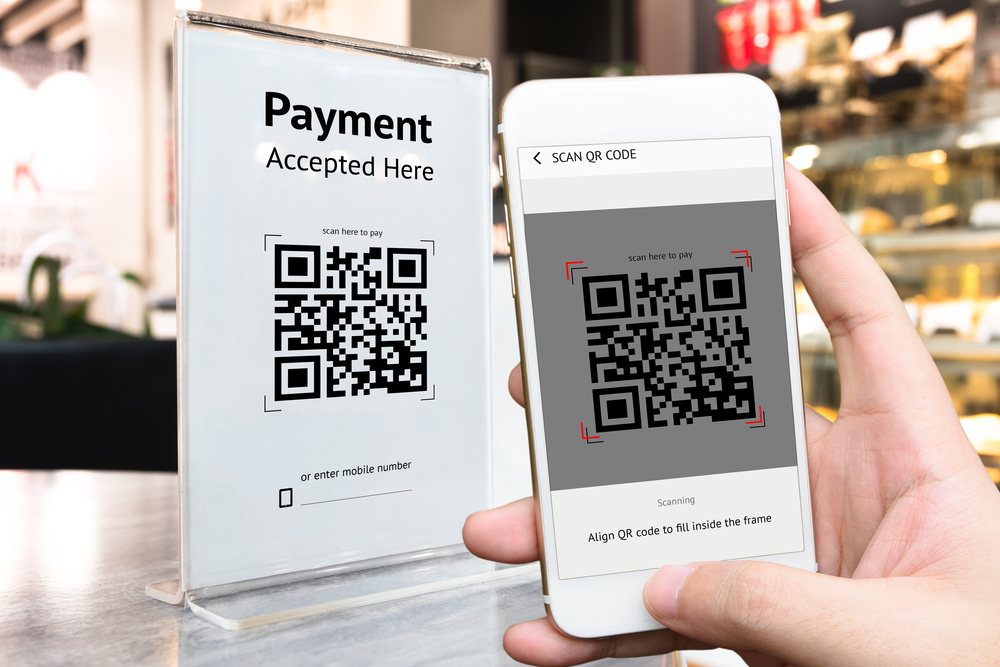
One solution is to offer quick response (QR) code payments, enabling organisations to create quick and secure contactless transactions with ease. This gives organisations the ability to accept touch-free payments, without the cost of new hardware. 

QR code payments are becoming increasingly popular, especially in the charity sector. For minimal cost, and without investing in new hardware or launching a new app, these organisations can accept donations or payments with ease. 

There have been some innovative uses of this new technology across the public sector. For example, some art galleries now place a QR code next to a painting. Customers can scan the code and then pick up a print on their way out of the gallery. 

Link to pay

Some organisations have utilised payment links to invoices (an emailed link that a customer can click on to pay their bill online) to support payments that were typically taken over the phone by staff at their call centres or offices in a face-to-face environment. 

The government’s public information website, gov.uk, uses our Payment Acceptance framework to provide this service to government departments or local government bodies. 

Payment links can be set up in minutes and require no technical integration. They are hosted on gov.uk, so citizens know they can trust them. Some departments have added links to email replies enabling citizens to pay online invoices for the first time.

Effective solutions for a stronger future

It is now clear that citizens want the flexibility and agility to pay however and whenever to continue.

This means all organisations, from a large government department to a small charity, now must accept cashless payment and have robust plans to deal with the challenges online payment presents, such as higher rates of card fraud and friction with customer authentication.

Our Payment Acceptance framework provides a proven, secure and innovative way to accept payments with a commercial benefit rate of 15% against typical market rates. 

To learn more: 

For more information about how our suite of Financial Services solutions that can help you build back better, whether you need to generate, recover or save money, visit our category page or read our new whitepaper: ‘Effective solutions for a stronger future’. 

You can find a full list of all the commercial agreements we offer, alongside details of how we can help you build policy considerations into your procurement, in our interactive digital brochure.